Reduce complexity
Consolidate inserts, trays, sleeves, wraps, partitions, and repeated functions that do not need to be separate.

Structural packaging redesign
Move from a multi-piece system with custom inserts and repeated handling to a cleaner structure with fewer parts, less packout labor, and a clearer purpose.
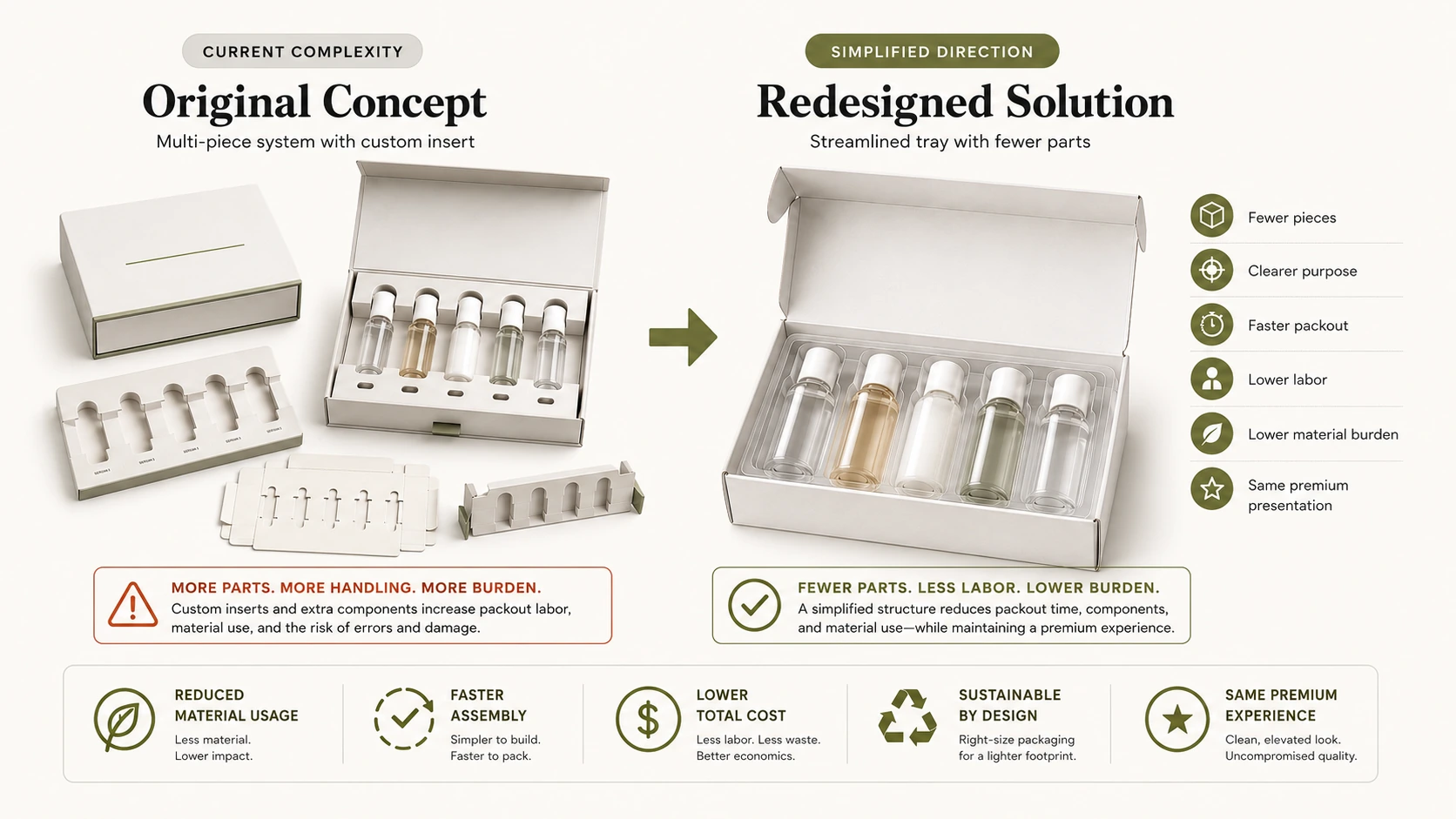
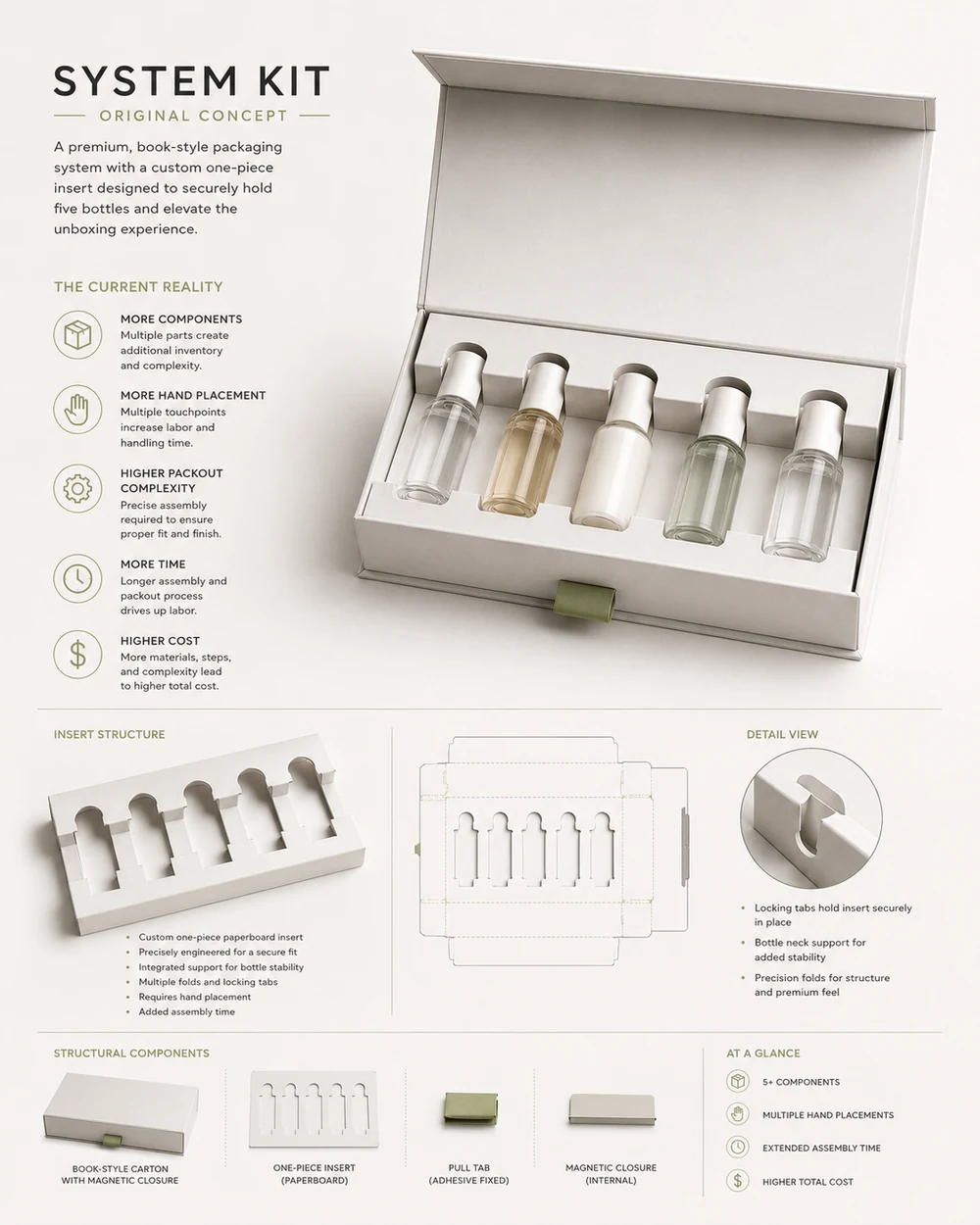
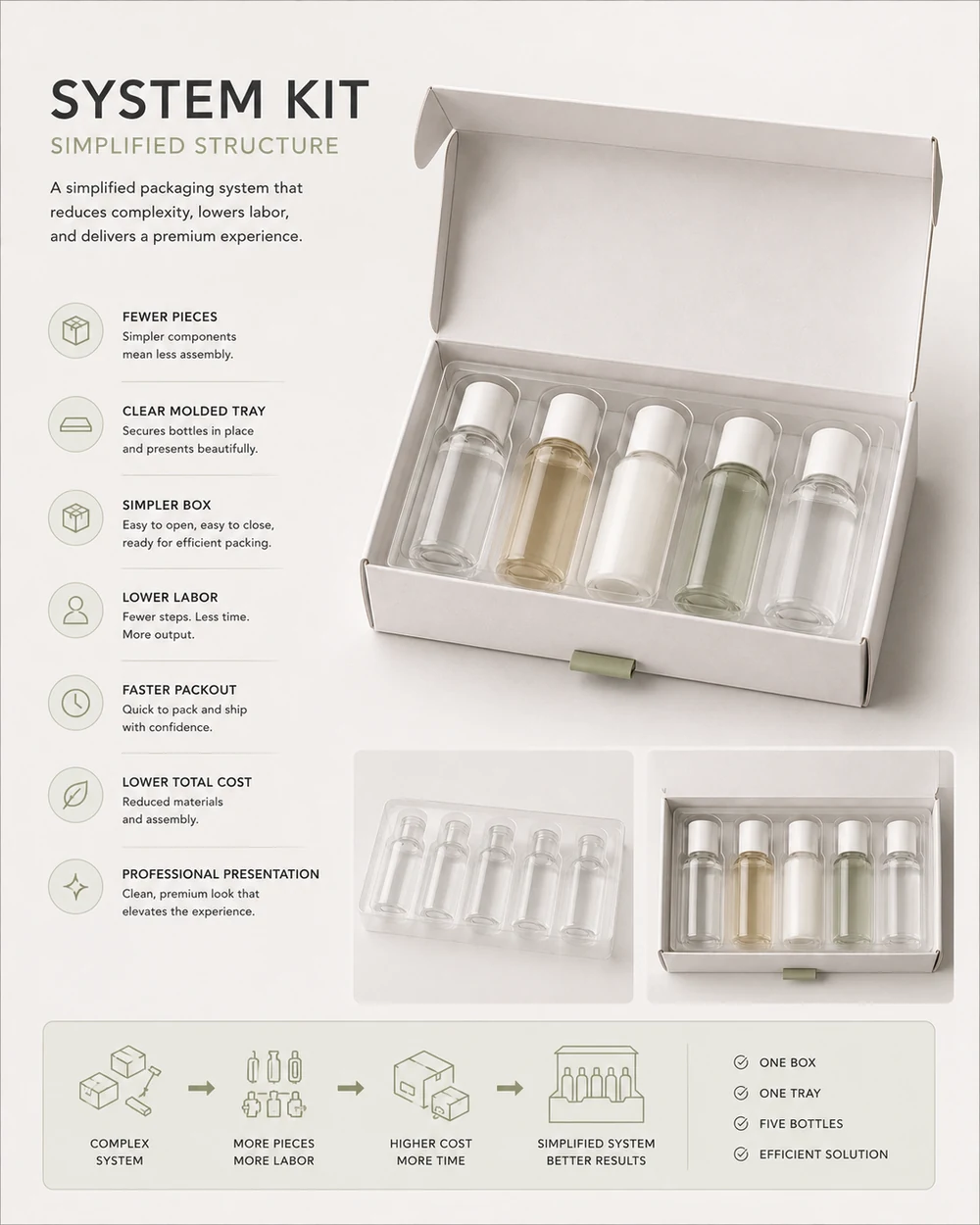
We evaluate whether trays, inserts, sleeves, closures, and repeated structural functions can be consolidated while maintaining product protection and presentation.
Design scope
Structural redesign is not about making the package look cheap. It is about removing unnecessary complexity while protecting the product, supporting operations, and keeping the presentation commercially appropriate.
Consolidate inserts, trays, sleeves, wraps, partitions, and repeated functions that do not need to be separate.
Simplify packout steps, product placement, closure, inspection, and line-side handling where the structure allows it.
Right-size board area, remove redundant parts, and evaluate simpler materials or retention concepts.
Review freight cube, pallet utilization, storage footprint, and the way the package moves through operations.
Define cushioning, retention, movement control, abrasion, compression, and other performance requirements early.
Coordinate prototypes, engineering, quotations, distribution testing, line trials, and final implementation steps.
Structural routes
Structural redesign is not limited to replacing one insert with another. We evaluate whether corrugated, chipboard, folding carton, thermoformed plastic, molded fiber, foam, films, or molded components can perform the required function with fewer parts and less handling.
Conceptual routes remain subject to engineering, tooling, supplier quotation, line trials, protection testing, and commercial validation.
Important distinction
Preliminary structural redesign identifies a practical direction and the requirements that still need to be resolved. Final dimensions, materials, tolerances, tooling, graphics, manufacturing details, protection, and testing require qualified engineering and production resources.
We coordinate those resources according to the project rather than forcing every opportunity through one predetermined manufacturer, material, or structural style.
Start with the current state
Share photographs, approximate annual volume, and the problem you want to solve. We will determine whether a deeper packaging review appears justified.